
WHOLESALE
Japanese Wagyu Wholesale for Restaurants & Hotels
All products › Japanese Wagyu
K.K.&K. Intertech Group imports and distributes authentic Japanese Wagyu to restaurants, hotels, yakiniku houses and steakhouses across Thailand on a wholesale (B2B) basis — genuine Wagyu raised and processed in Japan, with a certificate of authenticity for every lot. Alongside Japanese Wagyu we also supply Australian Wagyu MB6-7 for operations that need to hold per-plate cost at volume, so each menu item can be matched to the product that fits it.
Our two main lines are Kyushu Wagyu, for which K.K.&K. is the Exclusive Partner of Kamichiku Group, the largest Wagyu producer in the Kyushu region, and Omi Wagyu (近江牛), one of Japan's three most prestigious Wagyu breeds, supplied by Daikichi Shoten with over 120 years of trading history.
Beyond whole-carcass programs we also supply individual premium cuts that Japanese restaurants order by the piece — Rib Eye, Zabuton, Misuji, Kuri and Tri Tip — plus F1 Japanese beef and Australian Wagyu MB6-7 for venues that need tighter food cost while still putting marbled beef on the plate.
Products in this range
5 products — click any item for specs, cuts and pack sizes
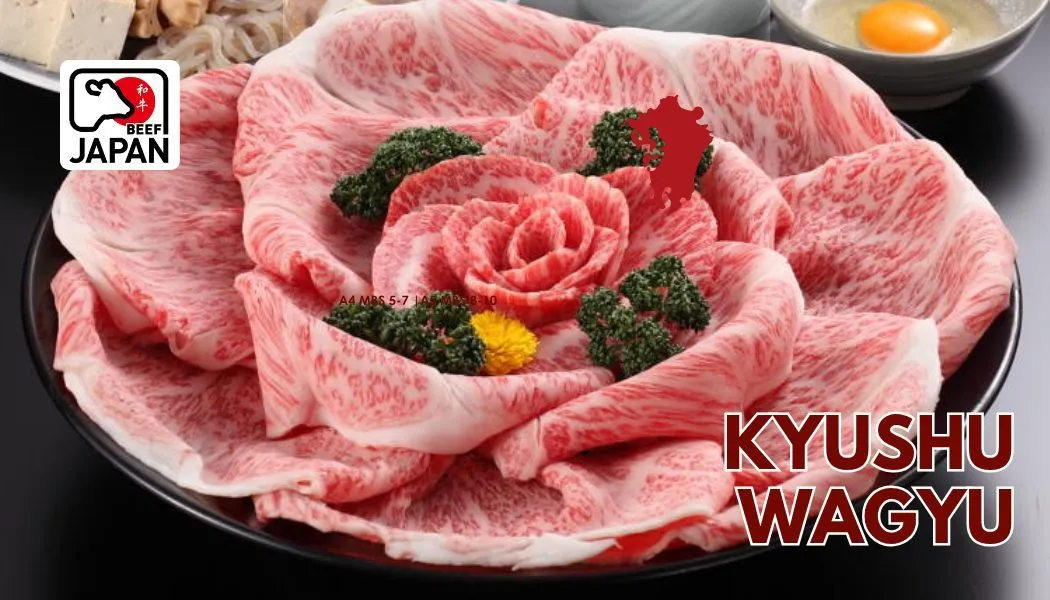
Kyushu Wagyu
Premium Wagyu from Kyushu — Exclusive Partner of Kamichiku Group
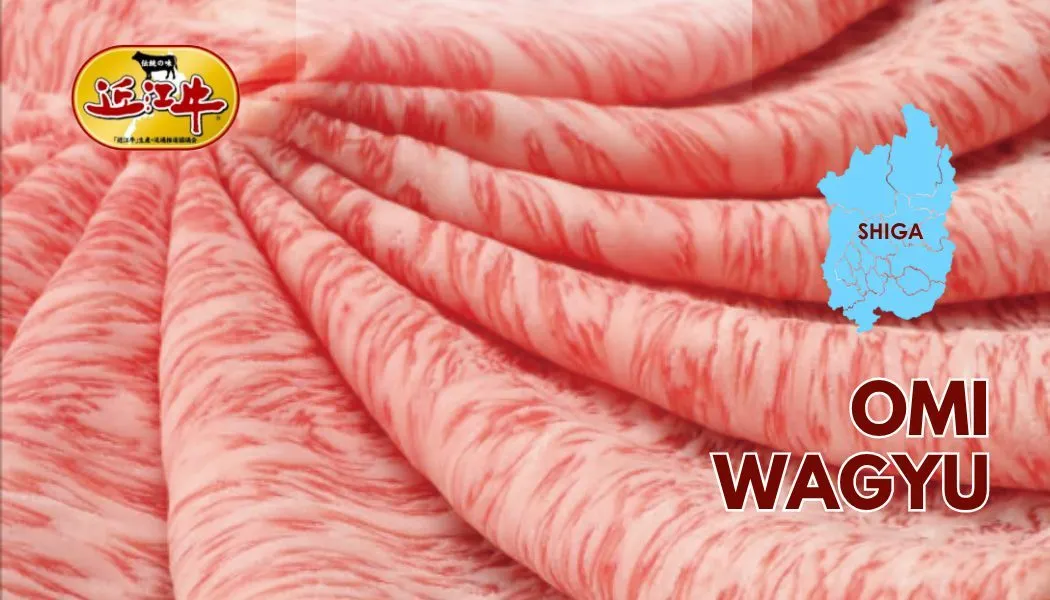
Omi Wagyu (近江牛)
Japan's Big 3 Wagyu — 'Princess of Wagyu', the most tender marbling
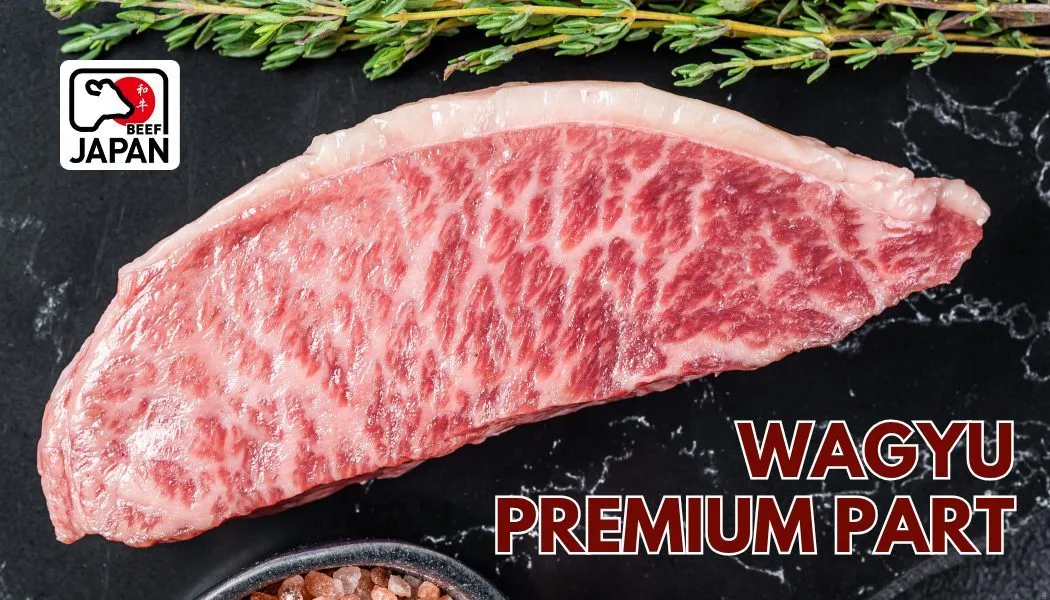
Wagyu Premium Parts
Exclusive premium cuts — the finest and rarest portions of Japanese Wagyu
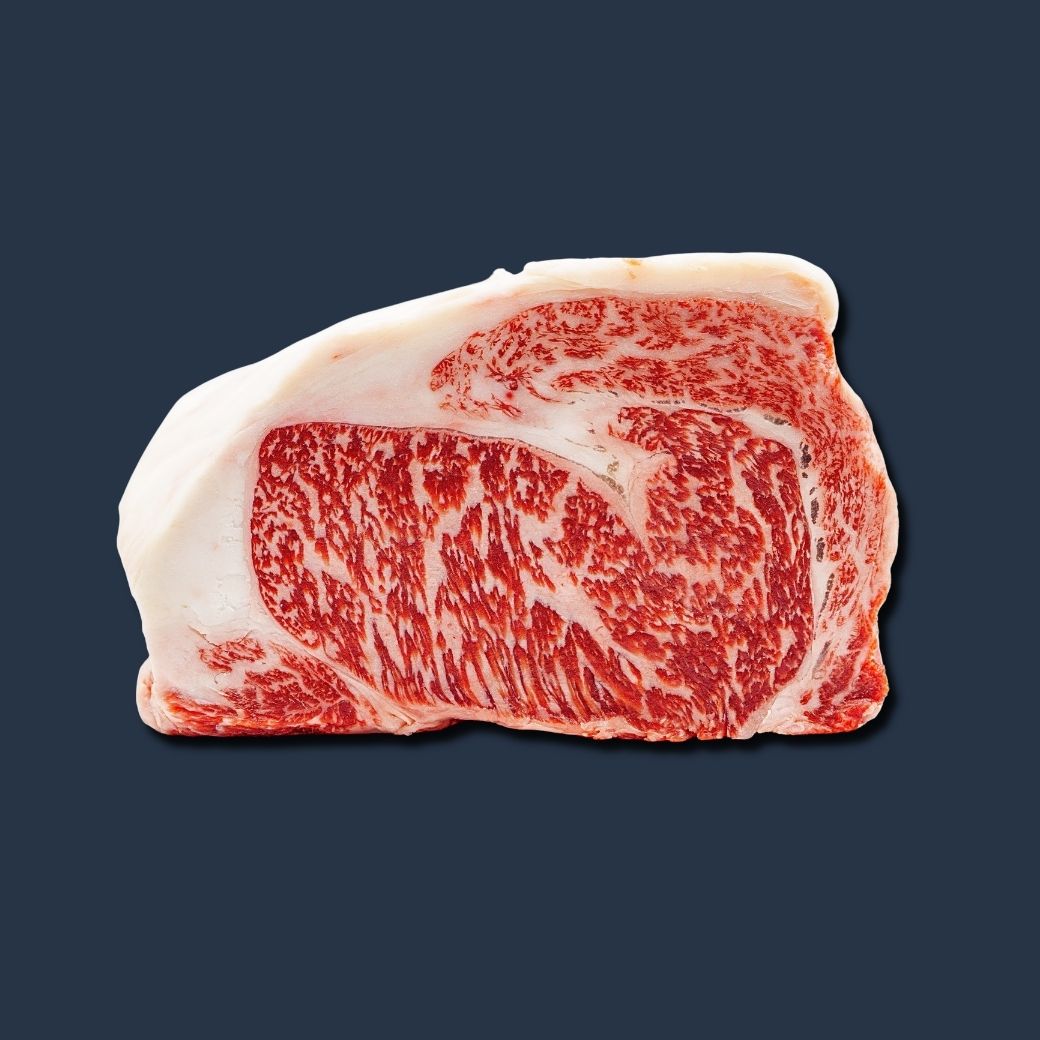
Australian Wagyu MB6-7
Australian Wagyu MB6-7 — attractive marbling with controllable plate cost
.webp)
Japanese Beef (F1)
Wagyu crossbreed — great value marbling for high-volume buyers
Order by individual cut
Each cut can be ordered on its own — click for its texture, weight per piece and pack size
How to read Japanese Wagyu grades (A4 / A5 / MBS)
Japanese Wagyu grades combine a letter and a number, e.g. A5. The letter (A–C) is yield grade — A is highest. The number (1–5) is meat quality — 5 is highest. A separate MBS (Marbling Score) 1–12 describes marbling fineness. K.K.&K. imports in the A4 MBS 5–7 and A5 MBS 8–10 range, the practical working range for both yakiniku and steak service.
Which cut suits which venue
Yakiniku venues usually pick cuts that slice thin and cook fast — Zabuton (dense marbling) and Misuji (tender like tenderloin with a soft sinew line). Steakhouses and hotels favour Rib Eye and striploin for thick-cut service. Venues wanting leaner red meat for roast beef or shabu tend to choose Kuri and Tri Tip. Every cut can be ordered separately — no whole-carcass commitment.
How much does A5 Wagyu cost — what drives the wholesale price
Wholesale Japanese Wagyu pricing is not a single fixed number — it depends on (1) grade (A5 above A4, higher MBS costs more), (2) the cut (premium cuts such as Rib Eye and Zabuton differ from red-meat cuts such as Kuri or Tri Tip), (3) Normal Cut vs Special Cut — Normal Cut has a lower price per kilo but needs in-house trimming and carries waste, while a trimmed Special Cut costs more per kilo yet yields almost the entire piece, so many restaurants find the real cost per plate is lower, (4) order volume and frequency, and (5) the JPY exchange rate and Japanese market season. The most accurate route is to send us the cut, grade and monthly volume you need and let our sales team quote against the real spec — no minimum order for wholesale. Call +66 2-136-1464 or email online@kkank.com
Which Wagyu cuts work for a beef buffet restaurant
Beef buffet and yakiniku-buffet restaurants have a different problem from steakhouses: they must hold cost per plate while still giving guests a genuine Wagyu experience. The cuts buffets reach for most are Kuri and Tri Tip — Wagyu red-meat cuts that stay tender and juicy at a more accessible price than the heavily marbled cuts. When beautiful marbling on the plate matters, Misuji and Zabuton melt in the mouth yet still cost less than Rib Eye or Striploin. High-volume operators often run F1 beef (Japanese Wagyu cross) as the everyday line and keep A4–A5 Wagyu as a premium item. The main cost lever is choosing a trimmed Special Cut — almost no waste, accurate cost per plate and no advanced knife skills needed in the kitchen. Every cut can be ordered separately with no minimum order.
How to order Wagyu wholesale from K.K.&K.
Wholesale (B2B) orders have no minimum. Free delivery in Bangkok on orders from 3,000 THB; upcountry shipping via Interexpress with temperature control. Contact sales at 02-136-1464 or online@kkank.com. For retail quantities, order through KKNK Delivery at 065-984-7763.
Knowledge & buying guides
Frequently asked questions
How do Japanese and Australian Wagyu differ, and which should I choose?
What is the minimum order for restaurants?
Should a restaurant choose A4 or A5?
Do you ship upcountry, and will the meat stay in condition?
How much does A5 Wagyu cost at wholesale?
Which Wagyu cuts should a beef buffet restaurant use?
How is F1 beef different from full-blood Japanese Wagyu?
Does K.K.&K. supply Australian Wagyu?
Request wholesale pricing
No minimum order · Free Bangkok delivery from 3,000 THB · Temperature-controlled shipping upcountry
Get a Quote 02-136-1464